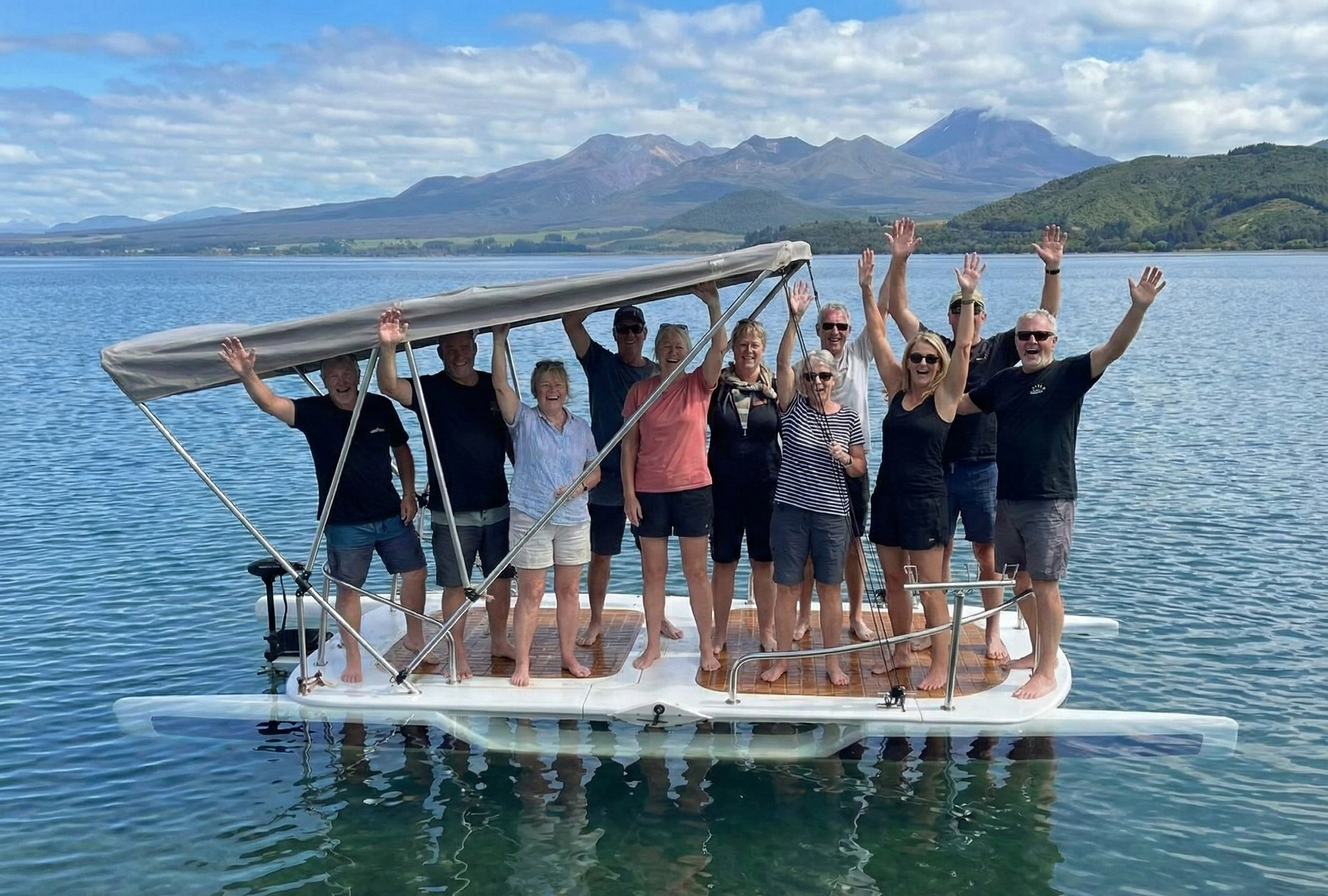
.png)
.png)
Marine Innovation: Forged by the Southern Ocean


The Birth of the Water UTV: From Southern Ocean Surf to North American Shores

.png)
.png)
We sketched the original concept on this napkin at a local fast-food joint
M13 Pre production "Hobby" Prototype

In the Beginning
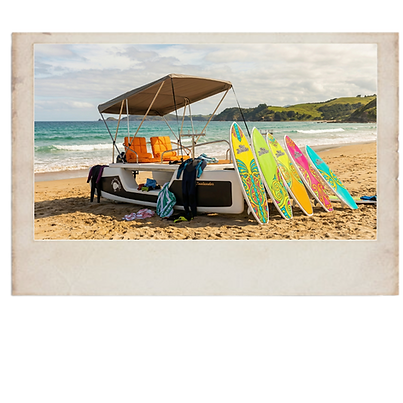
Our roots are not in traditional boat building. Since 2005, our factory has been engineering high-performance surfboards—a craft we still actively continue today. That deep expertise in shaping ultra-light, high-strength foam composites became the exact technological foundation for our boat hulls.
Working intimately with the local surfing communities, we witnessed a glaring operational problem: no existing boat could survive the specific, brutal demands of launching and recovering those surfers in heavy coastal environments.
2005
.png)
.png)


The Coastal Problem: Why Traditional Boats Failed.
When operating in heavy surf, traditional marine architecture forces a dangerous compromise. Small utility boats constantly swamp over the bow, bogging down engines when power is needed most.
Bow Swamping
High Gunwales
Abysmal Maneuverability
High Tip-Over Risk

The community had tried everything. Small, 16-foot or less traditional vessels like Jon boats and other foam filled boats were technically unsinkable, but in a wavy environment, their bows constantly took on water.
This swamping bogged down the hull and severely compromised the engine performance exactly when power was crucial for battling the surf. Conversely, scaling up to larger offshore boats introduced a new set of failures. Large vessels couldn't navigate shallow beaches or unprepared inlets. Their high gunwales made pulling a surfer out of the water physically exhausting, their fuel consumption was completely misaligned with the task, and their reverse performance in tight spaces was abysmal. Worst of all, when a massive wave hit a traditional deep-V hull from the side, the aggressive roll put the entire capital asset at risk of a catastrophic tip-over.
The "Hobby" Prototype: Engineered for Survival


To solve this, we tapped into our lead engineer’s background in developing ultra-low-drag hydrofoil bikes. We unofficially designed a "hobby model" of the M13 and M15 specifically as a highly specialized surfing support vessel.
We threw out legacy marine aesthetics and engineered purely for survival and recovery:
-
Zero Gunwales: We eliminated the sidewalls entirely, allowing crews to pull surfers and gear directly onto a flush deck.
-
Wave-Defeating Geometry: We utilized a pointed catamaran hull with an exaggerated front deck overhang to punch through and survive rogue waves that appear out of nowhere.
-
Impact Dispersal: The open side-hull design allows side-impacting waves to wash right through rather than flipping the vessel.
-
The Tapered Stern: On the M13 Special Performance, the very rear of the hulls are specifically tapered down to prevent following waves from catching the back of the boat in unprepared inlets.
-
Unsinkable Architecture: We packed the hulls with high-density closed-cell foam, ensuring maximum survivability with incredibly low engine power requirements.

2024
Because of the massive, stable flat deck, it evolved into a floating lunch platform. It was used to haul ice buckets, carry extra seating for spectators, and run gas out to support jet skis.
Soon, local waterfront businesses noticed the vessel's unmatched stability and started adopting the M13 as a general maintenance runabout. They began treating it exactly like a terrestrial UTV. Without needing to modify the boat, resorts and marinas were using it to:
-
Haul rubbish bins directly from island properties.
-
Transport standard wooden pallets of light cargo without breaking down the load.
-
Carry heavy water pumps to bail out yachts at the docks.
-
Act as a floating APU (Auxiliary Power Unit) hauling heavy generators.
-
Serve as on-water snack and beer carts for resort guests.
As these commercial needs grew, so did the demand for total payload capacity without increasing the speed or engine requirements—which naturally gave rise to the heavier-duty M15.
2025


The Unintentional Utility Vehicle (Water - UTV Chapter)

The 9.9 HP Loophole: By optimizing the hull for a kicker motor, the vessel achieves incredibly low wake generation and exceptional reverse control. It prevents workers from reaching dangerous speeds, allows underage or unlicensed operation in many jurisdictions, bypasses commercial registration red tape, and drastically lowers business insurance rates.
Solo Operation: Moving away from a rear tiller to a front center console allows a single operator to confidently dock the vessel without leaving the helm, significantly reducing workplace accidents.
Zero-Downtime Maintenance: The modular body-on-frame design eliminates the traditional curse of high-hour workboats—transom fiberglass cracking. If a hull section is damaged, it can be unbolted and replaced by standard maintenance staff without requiring highly skilled fiberglass labor.


2026
Formalizing the Formula: Assembled in Canada

What started as a surfboard company’s side project became a masterclass in commercial utility. Businesses realized that the M13’s low draft allowed them to access remote areas without sacrificing payload.
Today, we have formalized the New Zealander formula. We have achieved full ABYC compliance and officially moved our final assembly to Canada. We are bringing this battle-tested, wave-surviving platform to the North American and Bahama regions to officially launch an entirely new vessel category: The Water UTV.


